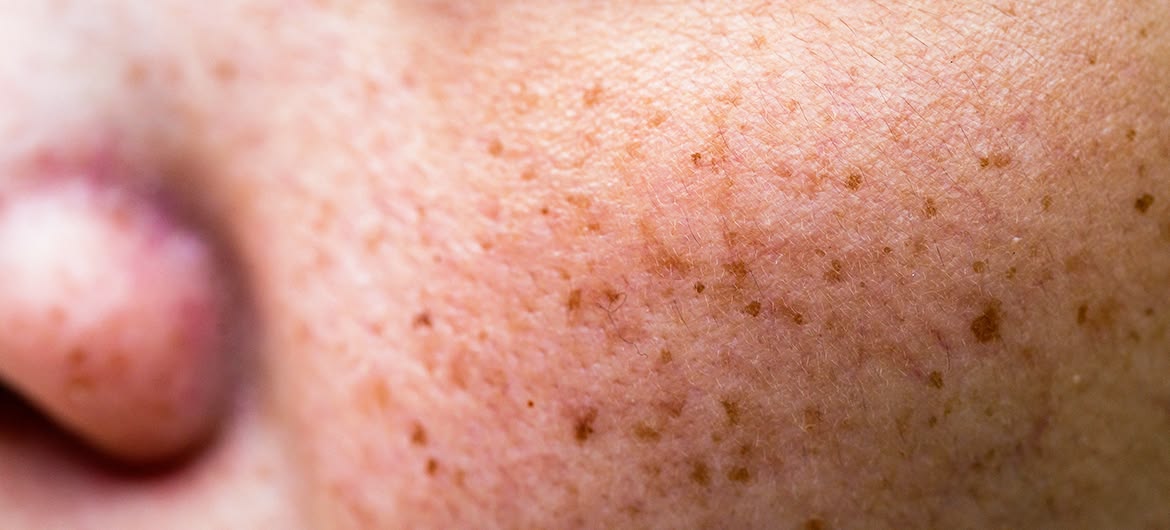
In Houston, sun exposure is not a season. It is a constant. Years of short walks to the car, lunches on the patio and weekends by the water quietly accumulate in the skin, and one day they surface as scattered brown spots, a persistent flush across the cheeks, or a tone that no longer looks even under natural light.
Many people respond the way they have been taught to: a brighter serum, a heavier concealer, a more aggressive scrub. These steps rarely change much, because the problem does not sit on the surface. Sun damage lives deeper, in pigment clusters and dilated vessels that topical products alone struggle to reach.
IPL photorejuvenation was designed for exactly this kind of damage. Below, we explain what is happening beneath the surface, how intense pulsed light works, and how we use the Lumenis M22 platform at Alira Med Spa to help restore a clearer, calmer complexion.
Why Sun Damage Looks the Way It Does
Pigment: the skin’s defense, left behind
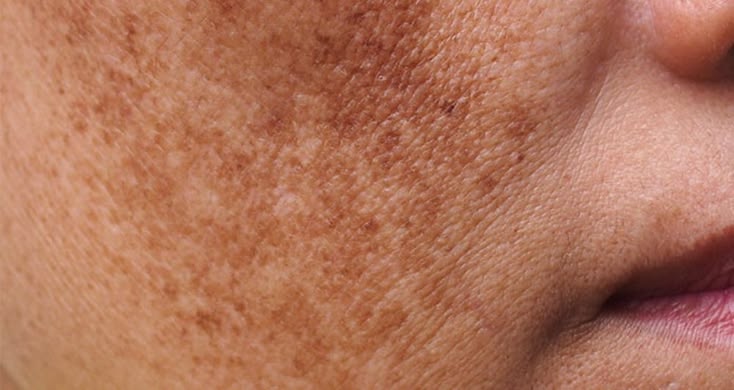
When ultraviolet light reaches the skin, melanocytes produce melanin as a protective response. Over time, and especially with repeated exposure, that pigment stops distributing evenly. It gathers in concentrated clusters, which we see as sun spots, freckling and a mottled, uneven tone across the face, neck, chest and hands.
Redness: the vascular side of photoaging
UV exposure also affects the small blood vessels near the surface. With time they can become more visible, producing diffuse redness, flushing, or fine broken capillaries around the nose and cheeks. For some, this overlaps with the look of rosacea, which Houston’s heat and humidity tend to intensify.
Why topical care reaches a ceiling
Brightening serums, antioxidants and sunscreen are essential. They help prevent new damage and support a more even tone over time. But established pigment clusters and visible vessels sit beyond what most topicals can meaningfully change. This is where light-based treatment becomes the more efficient path.
How IPL Photorejuvenation Works
Intense pulsed light delivers a broad spectrum of light in controlled pulses. Unlike a laser, which emits a single wavelength, IPL uses filters to select the range of wavelengths best suited to the target.
The principle is called selective photothermolysis:
- Melanin in sun spots absorbs the light energy, heats, and fragments. Over the following days, treated spots typically darken slightly and then flake away as the skin renews.
- Hemoglobin in visible vessels absorbs the light as well, which helps reduce the appearance of redness and broken capillaries.
- The surrounding tissue is largely spared, because the energy is tuned to the color of the target rather than the skin as a whole.
Why the M22 platform matters
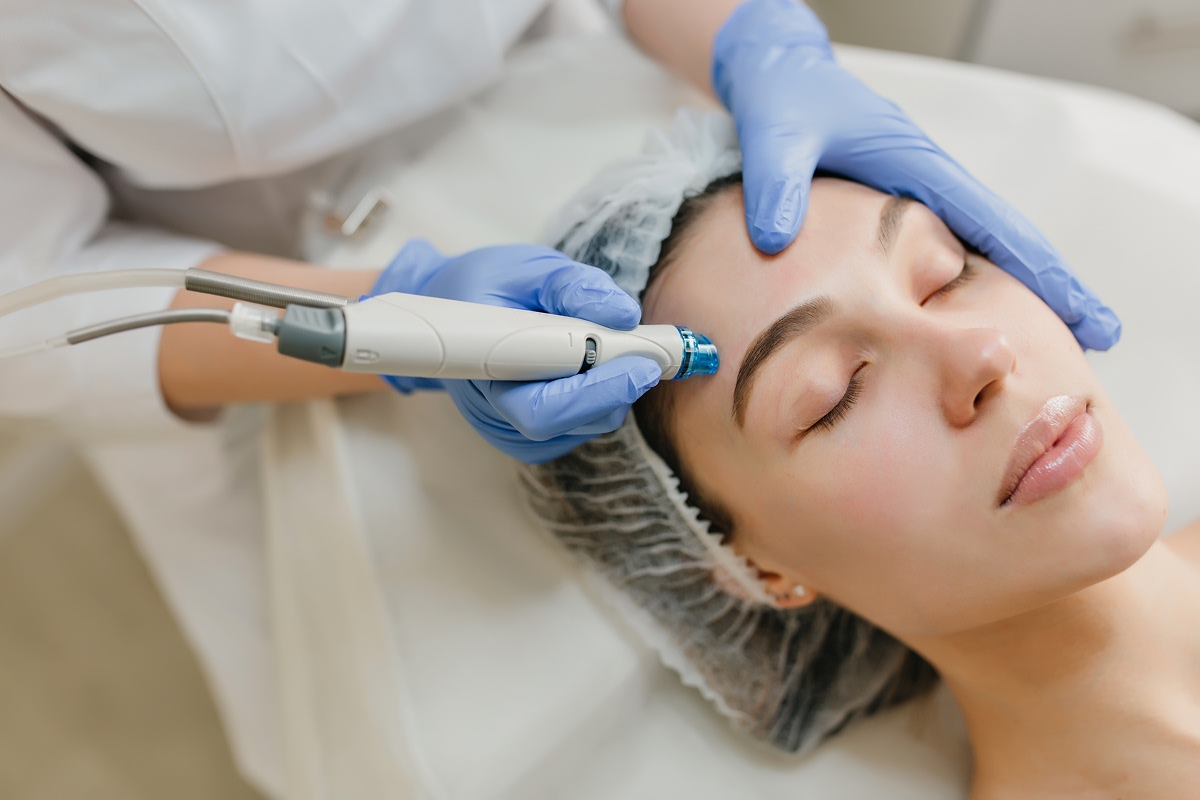
At Alira, we perform IPL on the Lumenis M22, a medical-grade platform known for its range of optimized filters and precise pulse control. In practice, this allows our providers to adjust each treatment to the specific concern, the area and the patient’s skin, rather than applying a single setting to everyone.
IPL vs. Q-Switched Laser: Choosing the Right Tool
Not all pigmentation responds to the same technology. Alira also offers a Q-Switched Nd:YAG laser, and understanding the difference is part of building the right plan.
| IPL Photorejuvenation (M22) | Q-Switched Nd:YAG Laser | |
|---|---|---|
| Light type | Broad-spectrum pulsed light, filtered | Single wavelength, ultra-short pulses |
| Best suited for | Diffuse sun damage, freckling, redness, broken capillaries | Discrete, stubborn pigmented spots; certain deeper pigment |
| Treats redness? | Yes, one of its strengths | Not its primary role |
| Treatment area | Larger areas: full face, neck, chest, hands | Targeted spots or specific zones |
| Typical downtime | Minimal; spots darken and flake over about 7–10 days | Minimal to mild, depending on settings |
In many cases, the answer is not one or the other. A consultation allows us to identify the type of pigment and vessel involvement before recommending a protocol.
Who Is a Good Candidate
IPL tends to be well suited for adults who notice:
- Sun spots or freckling on the face, chest, neck or hands
- Diffuse redness or a persistent flush
- Visible broken capillaries
- An overall uneven, photo-damaged tone
IPL is not the right choice for everyone. Deeper skin tones, recent tanning, active melasma and certain medications require a different approach or additional caution. This is one of the reasons we never begin without a clinical assessment.
Preparing for Your IPL Session
Preparation has a direct influence on both comfort and results. In the weeks before treatment, we generally recommend:
- Avoiding sun exposure and tanning, including self-tanners, for at least two to four weeks. Tanned skin contains more pigment, which competes for the light energy.
- Pausing retinoids and exfoliating acids for several days beforehand, as advised by your provider.
- Sharing your full medication history. Some medications and supplements increase light sensitivity.
- Arriving with clean skin, free of makeup, lotion and sunscreen on the treatment area.
A Seasonal Strategy for Houston Skin
In most climates, IPL is scheduled around a defined winter season. In Houston, the sun remains strong for most of the year, so planning matters. Many of our patients begin a series in the fall, complete it through winter, and enter spring with a clearer baseline and a maintenance plan. A single session each year, combined with diligent sun protection, often helps preserve results as new exposure accumulates.
What to Expect During and After Treatment
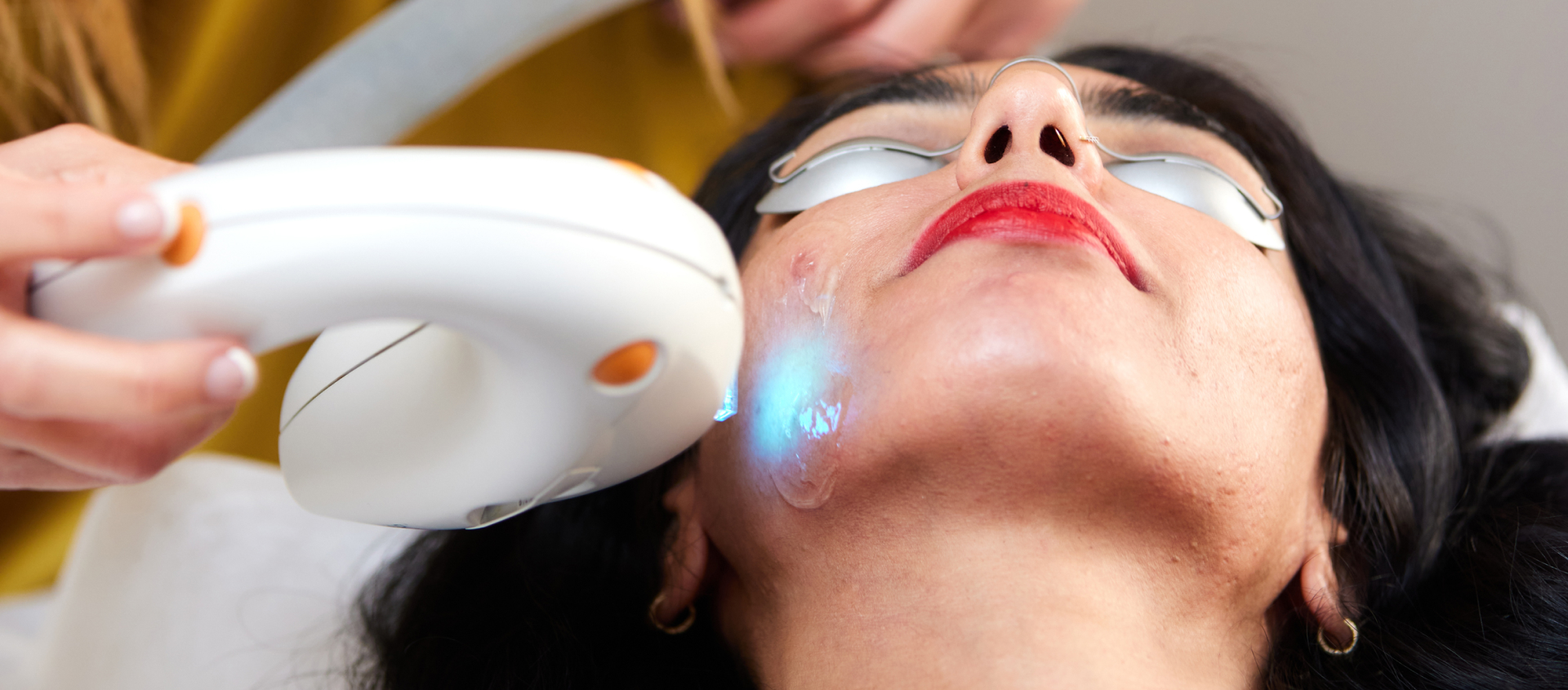
During the session. After cleansing, a cooling gel is applied and protective eyewear is placed. Each pulse feels like a quick, warm snap against the skin. Most facial treatments take about 20 to 30 minutes.
Immediately after. The skin may look slightly flushed. Treated spots often appear darker within hours, which is an expected sign that the pigment has responded.
The following week. Darkened spots gradually flake and lift away, usually within 7 to 10 days. Redness tends to soften progressively.
A series, not a single visit. Most patients see the most refined results with a series of sessions spaced several weeks apart, followed by periodic maintenance.
How to Support Your Results at Home
IPL works best within a consistent routine. A simple framework:
AM
- Gentle cleanser
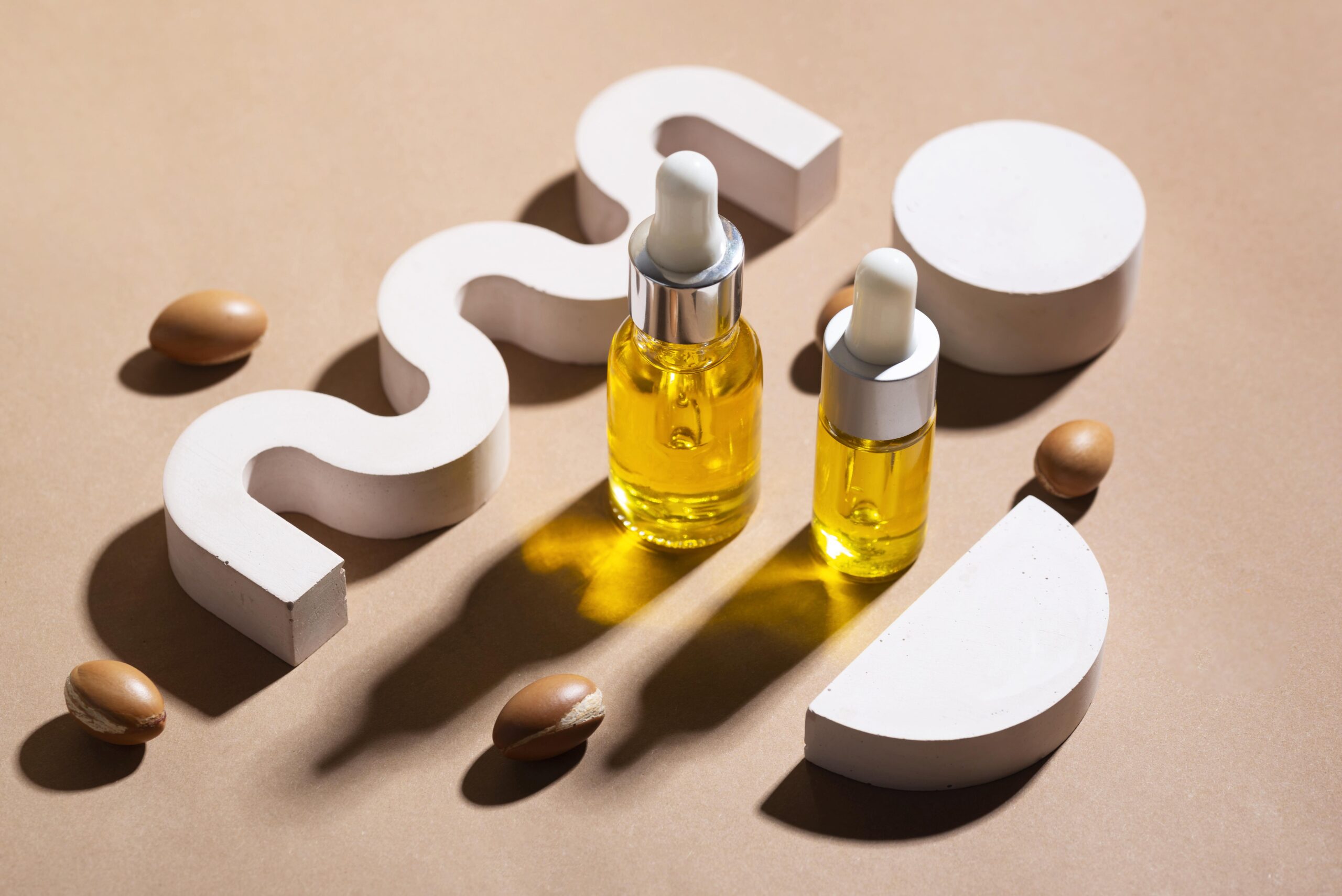
- Antioxidant serum (a vitamin C formulation such as SkinCeuticals C E Ferulic, when appropriate)
- Lightweight moisturizer
- Broad-spectrum SPF 30 or higher, reapplied through the day
PM
- Gentle cleanser
- Barrier-supporting moisturizer
- Brightening or retinoid products only as advised by your provider, and paused around treatment dates
In Houston’s climate, sun protection is the single most important factor in preserving results. New exposure creates new pigment.
Frequently Asked Questions
How many IPL sessions will I need?
Most patients benefit from a series of three to five sessions, spaced about four weeks apart, depending on the extent of sun damage and redness.
Is IPL painful?
Most people describe the sensation as a brief warm snap. Cooling gel and adjusted settings keep the treatment comfortable.
When is the best time of year for IPL in Houston?
Fall and winter are ideal, when sun exposure is lower and it is easier to avoid tanning before and after sessions.
Can IPL treat melasma?
Melasma is hormonally driven and can react unpredictably to heat and light. It requires a more cautious, individualized approach, which we determine during consultation.
Is there downtime?
Downtime is minimal. Treated spots darken and flake over about a week, and most people return to their routine the same day.
Begin With an Assessment
Sun damage is cumulative, but it is not permanent in appearance. With the right technology and a thoughtful plan, the skin can look clearer, calmer and more even. We invite you to schedule a consultation at Alira Med Spa in Houston, where our providers will assess your skin and recommend the protocol that suits it best.
Individual results vary. Schedule a consultation with our providers to determine the right protocol for your skin.
Related Posts
- Understanding the IPL Acne Solution
- Combining IPL and Laser Resurfacing
- Post-Laser Skin Care for Houston’s Humidity
Image Alt Texts
- Lumenis M22 IPL handpiece gently applied to a woman’s cheek during a photorejuvenation treatment at Alira Med Spa in Houston
- Close-up of facial skin showing sun spots and uneven pigmentation before an IPL photofacial
- Woman with a clear, even complexion in warm natural light after a series of IPL photorejuvenation sessions
- Provider wearing protective eyewear calibrating an M22 intense pulsed light device in a calm treatment room
- Medical-grade sunscreen and vitamin C serum arranged on a stone surface as post-IPL homecare essentials